EV vs Hybrid
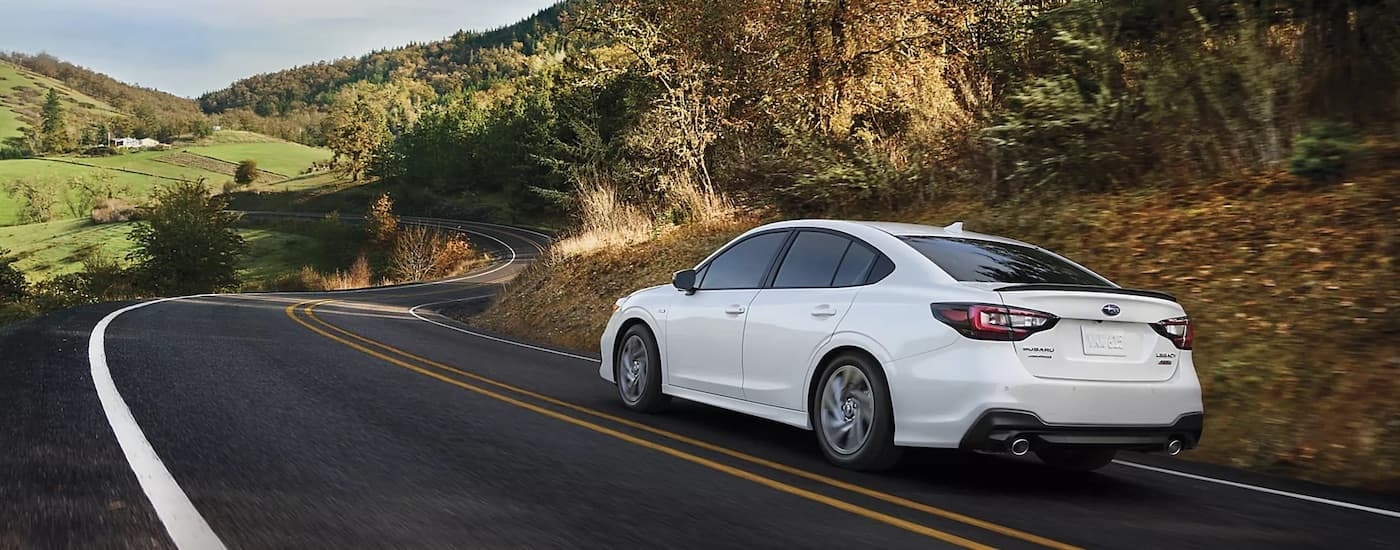
So, you're ready to upgrade your next vehicle to an electric model? That's exciting. But you may soon encounter the same question that everyone else has when shopping for a modern vehicle. What type of electric vehicle should you spring for? Especially since Subaru offers more than one type. Should you go with an EV vs hybrid, for example? What's a PHEV? Is there a difference? Let's break them down with brief explanations, then explore which options Subaru offers, so that you're truly ready to browse and shop for your next upgrade.
View Inventory FinancingAbout Us
EV vs Hybrid vs PHEV
Electric vehicles come in three varieties: Hybrid electric vehicles or HEVs, plug-in hybrid electric vehicles or PHEVs, and, finally, battery electric vehicles, called BEVs or just EVs. Subaru does not make or offer PHEVs, so we can forget about those for now.
True EVs or battery electric vehicles run entirely on electricity, which is supplied by a battery or a set of batteries. They are some of the most efficient vehicles you can buy, period, because they do not run on traditional fuel, produce no emissions, and often have quite capable range or mileage ratings. Manufacturers often list the range of an EV as MPGe, which stands for miles per gallon equivalent. This is so you can compare mileage with gas-only options, even though electric vehicles don't use liquid fuel, and so "per gallon" ratings are technically inaccurate.
Hybrid electric vehicles, or simply hybrids, combine gas and electric for better efficiency. They are essentially the best of both worlds, offering the performance of a gas-only vehicle with the efficiency and extended range of an electric vehicle. Hybrids are usually not plugged in to charge the batteries like a true EV. Instead, they are recharged by energy that's produced during a process called regenerative braking. Energy generated while the car brakes, which would otherwise be lost, is captured and sent back to the powertrain. There are other types of hybrid vehicles, but the most common use regenerative braking. With that technology, there's also no need to "plug in" a hybrid to charge the batteries, as that happens while you drive.
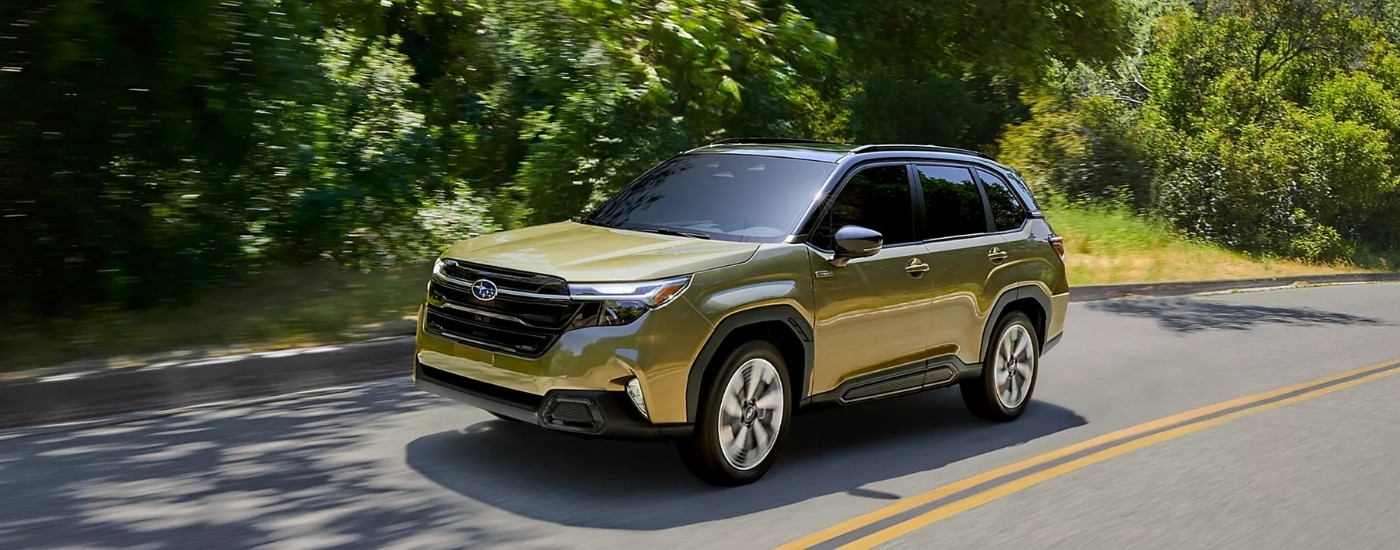
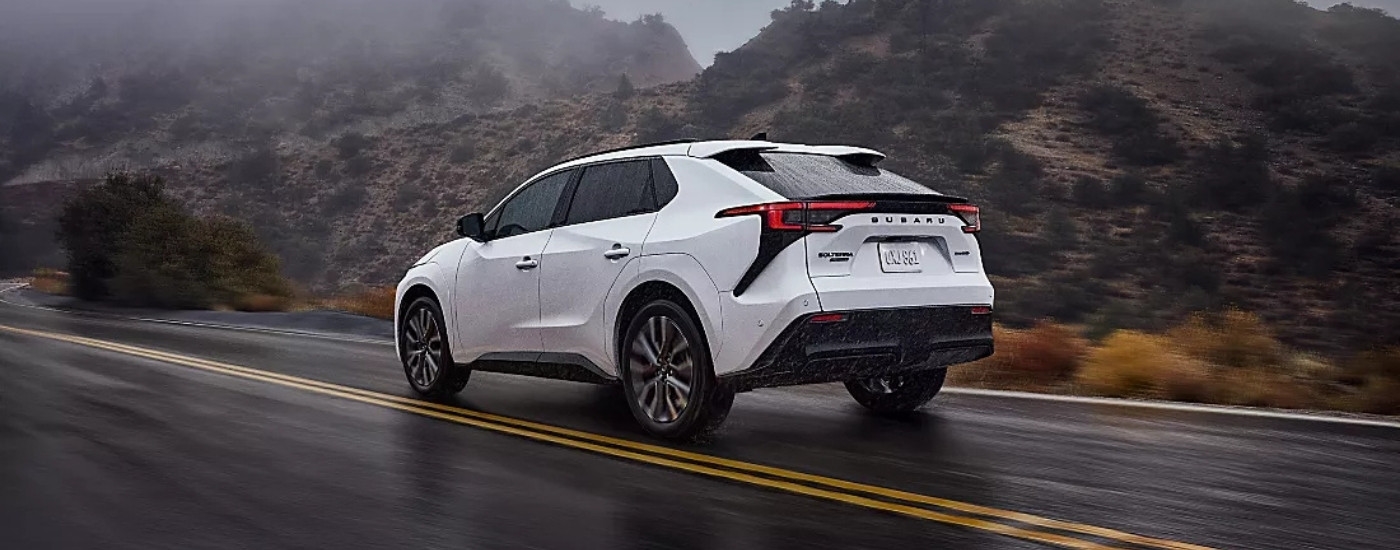
Now that you understand the difference, it's a good time to point out that Subaru offers both true EV and hybrid options. The Subaru Solterra and Trailseeker are examples of true EVs that produce no tailpipe emissions, run entirely on electricity, and as such require no oil changes during the vehicle's lifetime—oil is used to lubricate mechanical parts in a gas-powered engine. Conversely, the Subaru Forester Hybrid and the Crosstrek Hybrid are examples of HEVs, offering better efficiency and sustainability than gas-only models but with the benefits of electric powertrains, as well.
The Subaru EV vs Hybrid Experience
If you're the adventurous sort, and why wouldn't you be—Subarus are excellent off-grid and roaming companions—hybrids might speak to your sensibilities a little more. While electric vehicles are definitely more sustainable, they also require you to have access to a charging station or charger. Hybrids run on both fuel and electricity, giving them a bit more range and staying power away from the trappings of normal society. Your best options here are, again, the Subaru Forester Hybrid and the Subaru Crosstrek Hybrid.
If you spend more time on the road, running errands, handling daily activities, or commuting, the true EV models are an excellent choice. That includes the Subaru Solterra and Subaru Trailseeker. They're most efficient on the asphalt.
The good news is that all of Subaru's vehicles are on an even keel in terms of reliability, performance, and safety features. Regardless of which you choose for your lifestyle and daily treks, you won't be missing out by choosing another Subaru model. That should give you some peace of mind while you're making a decision. In addition, while the choice between an EV and a hybrid Subaru model does seem significant, there is a clear path you can follow for your upgrade.
For instance, if this is your first ever electric vehicle, it might be best to go with a hybrid to get the best of both worlds and also to get a feel for the new, efficient models. They're quieter than gas-only, offer extended range, and are relatively low-maintenance in comparison. True electric vehicles, on the other hand, are best for those who know they're ready to take the leap. You may already have established a line of charging sources, potentially have charging equipment installed in your home—or are planning to have the equipment added—and understand the requirements. Though that being said, it's not like there are a lot of limitations. Access to charging options is growing all the time.
It's also worth noting here that there are public charging stations available in most states and regions, though you may want to reference local resources to double-check. At home, you can use either a special EV-specific Level 2 charger, which requires installation and charges faster, or a standard household outlet, but these are slower than more capable systems. Don't be put off by the idea; the point is that it's something to consider and keep in mind when making your final choice.
Subaru Hybrid and EV: Just Right
In terms of the driving experience, Subaru's hybrid and EV models are nearly identical. EVs tend to be much quieter on the road because they're not running on a noisy, gas-powered engine. Moreover, EVs truly break away from emissions, versus a hybrid's reduced emissions, and technically, EVs offer a smoother ride, but with Subaru's models, you'd be hard-pressed to tell the difference.
To close out the short lesson and help out a little more with the final decision, style preference may play a role. All of the Subaru hybrids and EVs offer five seats. They all have decent and sizable cargo spaces in the rear. They all offer Subaru's titular and dynamic all-wheel drive. They all offer pretty much the same baseline standard safety features, including forward collision warnings, lane-departure alerts, automated emergency braking, and adaptive cruise control. That leaves the aesthetics and personal style.
The Subaru Solterra has a more modern and sleek look. At the same time, the Trailseeker offers the most rugged-looking design elements of the bunch, the Forester Hybrid is an excellent cross between a classy and family-style vehicle, and the Crosstrek Hybrid is a solid blend of all of the other designs, suitable for practical use by families, solo drivers, and young professionals alike.

Bringing Home the Electric or Hybrid Ride
In the end, it's going to come down to your most common usability, your personal preference on looks and style, and, ultimately, what you're most comfortable with. If this is your first time owning an efficient vehicle, the hybrid will give you a soft landing pad, versus jumping right into the deep end with an all-electric model. You still get the same benefits, the excellent range, and the quiet, smooth drive, without giving up traditional fuel completely. Plus, they tend to perform better off-road and in rugged scenarios. If you already know what you want, then electric is the way to go.
This is Subaru we're talking about, Solterra, Trailseeker, Forester, Crosstrek, they're all worthy vehicles that will get you to where you need to be, safely and happily. Visit us today to learn more or go for a test drive.