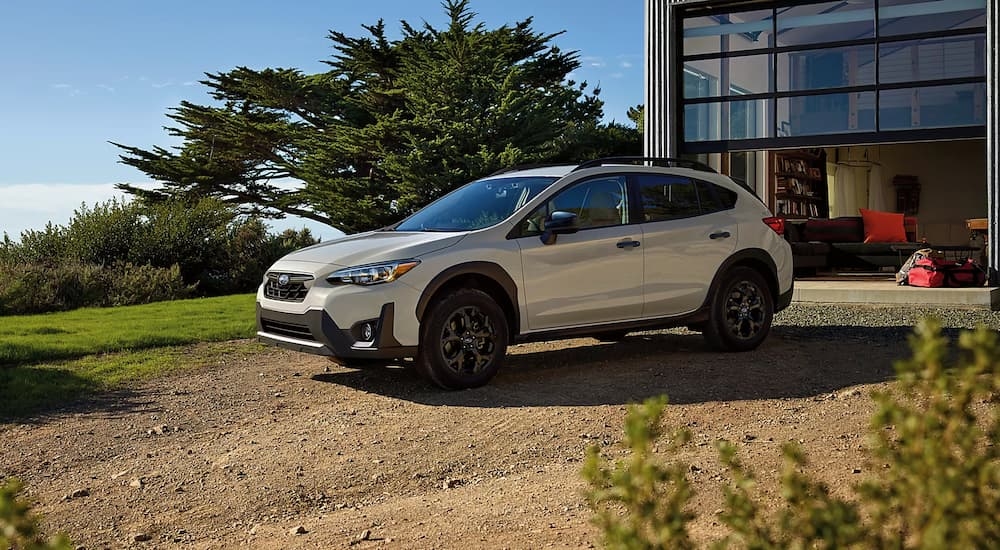
If you’ve been scrolling used car dealership inventory pages while asking yourself whether a used Crosstrek or Forester makes sense for you, this is your sign to stop scrolling and start deciding. Subaru shoppers rarely arrive here by accident—usually it’s because life demands something affordable, dependable, winter-capable, and tolerant of kids, pets, and chaos.
Both models have earned reputations for longevity and practicality, but that doesn’t mean they behave the same once you’re behind the wheel. The Crosstrek feels youthful and agile, almost eager to squeeze into tight parking spots, while the Forester stands taller, roomier, and unbothered by oversized cargo or an overly exuberant pet. The real answer comes down to your unique lifestyle and needs.
Practical Performance: Finding Your Subaru Match
Most shoppers approach a used Subaru with two primary questions: “How does it handle inclement weather?” and “Can it maintain pace with other SUVs on the road?” Fortunately, both the Crosstrek and Forester feature Subaru’s standard Symmetrical All-Wheel Drive. This system provides the traction necessary to remain composed during rain or snow, allowing for a confident driving experience. The true distinction lies in how these two models deliver their power.
The Crosstrek: Efficiency Meets Agility
Used Crosstrek models from 2018 to 2023 typically feature a 2.0-liter four-cylinder engine producing 152 hp and 145 lb-ft of torque. Depending on the trim, this is paired with either a CVT or a six-speed manual transmission. It is an intentionally efficient design, ideal for urban commuting.
For drivers seeking a bit more "pep," a 2.5-liter engine was introduced in 2021. This upsized option delivers 182 hp and 176 lb-ft of torque, making highway merging a much more seamless experience. Subaru even offered a plug-in hybrid powertrain from 2019 to 2023, which you can occasionally find when shopping for a used Crosstrek.
The Forester: Steady, Capable Strength
The Forester offers a more substantial performance baseline. Models from 2019 to 2023 came standard with the same 2.5-liter engine that is available as an option in the Crosstrek, producing 182 hp and 176 lb-ft of torque.
You may occasionally find a rare 2017 or 2018 turbocharged Forester XT making 250 hp, but those units are highly sought after and sell quickly. The Forester isn't designed to be sporty—rather, it is a composed workhorse that remains unfazed by a full cabin or steep mountain inclines.
Gas Money Counts
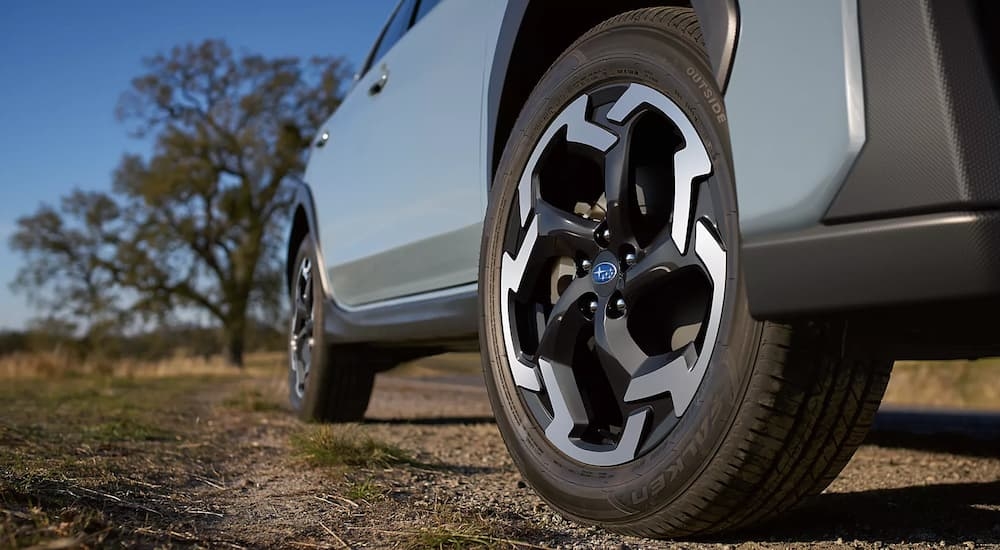
Fuel efficiency is where the Crosstrek often wins fans. The 2021 Crosstrek gets up to 28 MPG in the city and 33 MPG on the highway, while the plug-in hybrid variant returns 90 MPGe and can travel for 17 miles on battery power alone. It is a budget-conscious SUV that prioritizes fuel savings for daily commutes and long-distance road trips alike.
The Forester isn’t wasteful either—the 2019 to 2023 models generally come in around 26 MPG in the city and 33 MPG on the highway. The Forester drinks slightly more fuel than the Crosstrek but offers more cabin space in return. For many buyers, the slight difference in fuel costs is a fair trade for the added comfort and legroom.
The #1 Deciding Factor for Most Buyers
If your life includes rear-seat passengers, giant grocery hauls, pets, sports equipment, or weekend adventures, interior dimensions will likely dictate your choice.
The Crosstrek is the subcompact sibling—practical, cozy, and big-for-its-class. The 2021 model provides 100.9 cubic feet of passenger volume and 55.3 cubic feet of cargo space with seats folded. This makes it well-suited for camping gear or a bicycle, though some disassembly may be required for larger items.
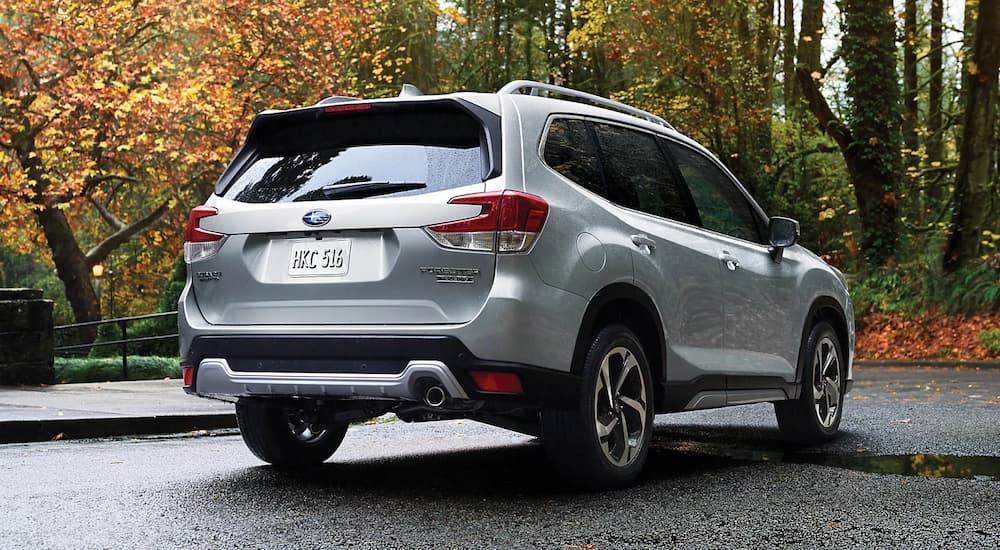
The Forester prioritizes utility with 107.6 cubic feet of passenger volume and 74.2 cubic feet of cargo volume in the 2022 model. With its tall roof and squared-off rear hatch, loading the Forester feels easy, low-stress, and family-friendly. Many shoppers who initially planned to buy a used Crosstrek often pivot to the Forester once they experience the ease of entry and the upright interior feel.
Bells, Whistles, and Everyday Living
Used Crosstrek models stand out for their comfort relative to their size. Trims like the Premium and Limited offer heated front seats, leather-trimmed interiors, and available power moonroofs. The model's ride quality is soft enough that potholes feel less personal, and newer models offer wireless Apple CarPlay and Android Auto.
The Forester, though, is designed with families in mind. It has wider back seats, larger windows, and a panoramic sunroof that makes road trips feel less like trapping your kids in a metal box. Features on upper-tier trims (Touring, Limited) can include leather upholstery, heated steering wheels, and memory-adjustable driver seats—the kinds of small luxuries that really elevate every drive.
Subaru’s Commitment to Safety
Both vehicles are rooted in the same safety-first DNA, which is why so many used models include Subaru’s EyeSight system across a wide range of trims. That means collision warning, automatic emergency braking, adaptive cruise control, and even lane-keeping assist are often available. If you happen to find a used Subaru without EyeSight, it is not an automatic disqualifier, as these are still very safe vehicles. Safety in a Subaru isn’t just a feature list—it’s a personality trait.
Where the Crosstrek and Forester begin to separate is in crash-test performance and physical confidence. The Forester typically edges ahead thanks to its taller body structure and slightly more protective stance, making it a favorite for parents who want to make sure their family has the best protection possible.
The Crosstrek is still incredibly safe; it just leans more toward “nimble commuter” energy rather than the Forester’s "fortress-on-wheels" appeal. Choosing between the two models often comes down to whether you want exceptional agility or an extra dose of protective bulk around you.
Which Subaru Is Actually Right for You?
One of the fastest ways to determine your Subaru match is to look at how you actually live. If your car is primarily a commuter pod—navigating downtown streets, squeezing into tight parking spaces, and carrying only you and maybe one passenger—the Crosstrek makes life easier. It is lighter on its feet, easier on fuel, and usually easier on the wallet in the used market, giving you a newer model year or lower mileage for the same price. Daily errands and solo drives feel simple instead of stressful.
But if your SUV regularly transports kids, dogs, camping gear, sports bags, and other items that appear without explanation, the Forester steps into its spotlight. It was built to carry life at full volume, with more usable cargo space, more comfort for back-seat riders, and a cabin that is always ready to fit one more bag. It is also the better long-term option if you plan to keep your vehicle for a while and want to grow into it instead of out of it. For families or anyone who often finds themselves hauling a lot of gear, the Forester is the SUV that won’t flinch.
Confidence Comes From the Right Match
The Crosstrek and Forester stand side-by-side at our used car dealership for a reason—both are dependable, winter-capable, and smart long-term bets, but the right choice hinges on the space you truly need and the way you actually drive.
If agility, efficiency, affordability, and the thrill of parking in impossible spots matter most, the Crosstrek will feel like your co-pilot. If flexibility, cargo room, family-friendly seating, and the freedom to say yes to more without thinking speak to you, the Forester will feel like home.
These two do not compete as rivals—they fill different niches. The good news is, there is no wrong answer, and our team is ready to help you find the used Subaru that fits your world better.